Table of Content
- Introduction: Understanding the Dilemma
- The Rise of AI Tools: What You Need to Know
- Benefits of Using AI Tools
- Limitations of AI Tools
- Challenges of Hiring Employees
- AI and Human Collaboration: Finding the Balance
- Case Studies: Companies Navigating the AI-Employee Dilemma
- Conclusion: Making the Right Choice for Your Business
Introduction: Understanding the Dilemma
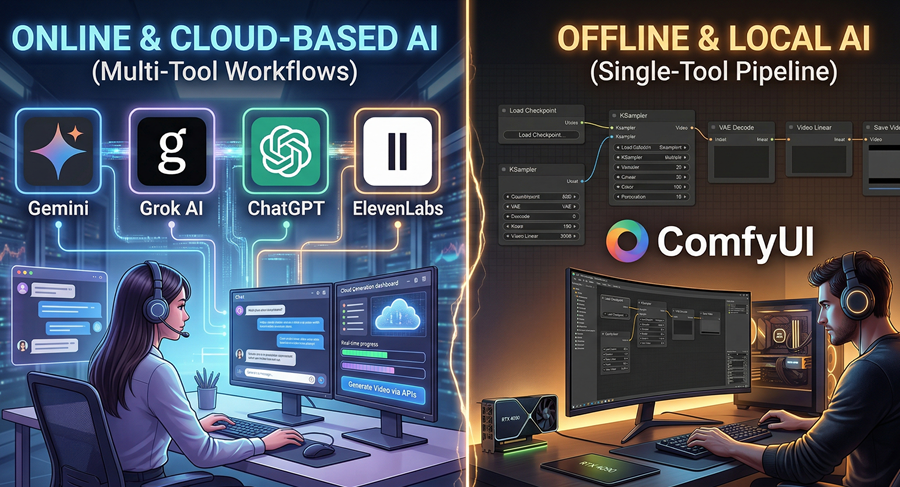
In recent years, businesses have witnessed a remarkable evolution facilitated by the emergence of artificial intelligence (AI) tools. These advancements have sparked a significant debate among organizational leaders and decision-makers regarding whether to implement AI solutions or hire human employees for various tasks. This dilemma is particularly pronounced in sectors such as customer service, data analysis, and administrative support, where AI tools can often outperform traditional human roles in terms of efficiency and speed.
The increase in AI capabilities has led to various benefits for organizations, including cost reduction, improved accuracy, and enhanced scalability. However, this raises critical questions about the role of human workforce members in environments increasingly dominated by technology. While AI can streamline processes and handle repetitive tasks, some functions still necessitate human insight, empathy, and creativity—qualities that, as of now, AI has yet to replicate to a satisfactory extent.
Furthermore, the focus on AI tools produces a complex intersection of opportunity and challenge. For instance, many businesses attempt to strike a balance between utilizing AI for efficient operations and maintaining a workforce that embodies creativity and cognitive agility. This necessitates an in-depth examination of both options; the certainty that AI can manage data-driven tasks effectively contrasts sharply with advantages such as adaptability and interpersonal skills that human employees bring to the table.
This article aims to explore both AI tools and human employees through a comprehensive analysis, highlighting the advantages and drawbacks inherent to each. By elucidating these factors, organizations can make informed decisions that leverage the strengths of both AI and human talent, fostering a more balanced and efficient operational framework.
The Rise of AI Tools: What You Need to Know
Advancements in artificial intelligence (AI) technology have surged dramatically in recent years, transforming the landscape of multiple industries. The capabilities of AI tools have expanded, enabling them to perform complex tasks previously reliant on human intervention. From machine learning systems to natural language processing, these tools are now more sophisticated and accessible than ever.
Several popular AI tools exemplify this growth. For instance, ChatGPT has revolutionized customer service with its ability to generate human-like responses, improving interaction efficiency and satisfaction. Similarly, image recognition software, such as Google Vision, is leveraged in sectors like retail and healthcare for tasks such as inventory management and diagnostic assistance. These applications showcase how AI enhances precision and speed, cementing its role in modern business practices.
The adoption of AI technology stems from various factors that contribute to operational efficiency. Organizations recognize that integrating AI tools can lead to significant cost savings. By automating repetitive tasks, businesses can allocate resources more effectively, allowing employees to focus on strategic initiatives rather than mundane processes. Furthermore, AI tools offer unmatched accuracy; for instance, AI algorithms in data analysis can uncover patterns and insights that might be overlooked by human analysis, thus enabling better decision-making.
Aside from cost-effectiveness and efficiency, the adaptability of AI tools is a crucial reason for their growing popularity. Companies can fine-tune these systems to align with specific business needs, ensuring they remain competitive in fast-paced markets. Additionally, AI’s potential for continuous learning means that as it receives more data, its performance improves, presenting a compelling case for its long-term adoption.
Benefits of Using AI Tools
The integration of artificial intelligence (AI) tools into business operations provides a multitude of benefits that significantly enhance efficiency and effectiveness. One of the most prominent advantages is the increase in productivity. AI tools can automate repetitive tasks, allowing human employees to focus on higher-value activities. This optimization often leads to more rapid turnaround times in project delivery and a notable improvement in output quality.
Moreover, using AI tools can contribute to a substantial reduction in labor costs. By automating tasks that would typically require a substantial labor force, businesses can save on payroll expenses. This economic efficiency is especially crucial for small to medium-sized enterprises that may have tighter budgets. Additionally, AI tools can work around the clock without the need for breaks or downtime, further maximizing operational efficiency compared to traditional labor models.
Scalability is another significant advantage of AI tools. As businesses grow and their operational needs expand, AI tools can be adjusted to accommodate increased workloads without the necessity of hiring additional staff. New algorithms or enhancements can be integrated with relative ease, allowing companies to seamlessly adapt to changes in market demand.
Furthermore, AI tools are exceptionally adept at handling large datasets. The capacity to analyze vast amounts of data at unprecedented speeds enables businesses to derive actionable insights that can inform decision-making processes. This powerful analytical capability is crucial for maintaining a competitive edge in today’s data-driven landscape.
In summary, the advantages of implementing AI tools span from increased productivity and reduced labor costs to enhanced scalability and superior data handling capabilities. These advantages make a compelling case for businesses looking to streamline their operations and improve performance in an increasingly competitive market.
Limitations of AI Tools
Artificial intelligence (AI) tools offer a range of capabilities; however, they are not without their limitations. One significant challenge with AI systems is their inherent lack of creativity. Unlike human employees, who can generate innovative ideas and think outside the box, AI relies heavily on existing data and predefined algorithms. This constraint can stifle original thought, resulting in solutions that may be effective but lack the imaginative spark that characterizes human ingenuity.
Moreover, AI tools also exhibit a strong reliance on data inputs. This dependence means that if the data is biased or incomplete, the output generated by the AI can also reflect these flaws. This poses significant implications, especially in sectors such as healthcare or finance, where accurate data is crucial for making informed decisions. Without high-quality data, AI tools may lead to erroneous conclusions, adversely affecting the organizations that utilize them.
Another critical issue is the potential job displacement caused by the automation driven by AI systems. As organizations seek efficiency and cost reduction, employees may find themselves replaced by machines capable of performing the same tasks. This transition not only disrupts lives and livelihoods but also raises questions about the future of work itself and the economic models that support it.
Finally, ethical considerations surrounding AI tools cannot be overlooked. Concerns about privacy, security, and the moral implications of automated decision-making pose significant challenges. The lack of transparency in many AI processes raises questions about accountability, particularly when these systems make decisions that impact people’s lives. Addressing these ethical dilemmas is essential to ensure responsible AI deployment in various sectors.
Human employees are a cornerstone of any successful workplace, contributing a range of unique advantages that artificial intelligence tools cannot replicate. One of the standout qualities of human workers is their emotional intelligence. This refers to their ability to recognize, understand, and manage emotions, both their own and those of others. In professional environments, this skill is vital for effective communication, conflict resolution, and building interpersonal relationships, which ultimately foster a positive workplace culture.
Further emphasizing the value of human employees is their intrinsic creativity. Unlike AI, which relies on data and algorithms, humans can think outside the box, generating innovative ideas and solutions that may not be evident through logic alone. This creative problem-solving capability is essential in industries that require fresh perspectives and adaptability to ever-changing market trends. Humans possess the ability to navigate ambiguity and uncertainty, offering nuanced solutions informed by personal experiences and emotional insights.
Another critical aspect in which human employees excel is adaptability. In a rapidly evolving work environment, the ability to pivot strategies and approaches is vital for sustained success. Humans can adjust to new technologies, market demands, and shifting organizational priorities more fluidly than AI tools. While AI can analyze data and predict trends based on historical patterns, it lacks the human touch necessary to interpret these trends within a broader social or organizational context.
Additionally, the ability of human employees to engage in complex problem-solving cannot be overstated. They are equipped with the cognitive skills necessary to tackle multifaceted challenges that often require interdisciplinary knowledge and collaboration. This synergy fosters teamwork, innovation, and leads to outcomes that benefit the organization as a whole. The unique blend of empathy, creativity, and adaptability that human employees bring to the table ultimately reinforces their irreplaceable role in the modern workplace.
Challenges of Hiring Employees
The process of hiring employees is often fraught with various challenges that can impede business efficiency and increase operational costs. A primary obstacle is the recruitment process itself, which typically involves multiple stages, including job postings, candidate screenings, interviews, and background checks. Each step requires time and resources, thus diverting attention from core business activities. Moreover, a poorly executed recruitment strategy can lead to a hiring mismatch, resulting in added costs associated with replacing unfit employees.
Training new hires constitutes another significant cost associated with employee onboarding. Once candidates are selected, companies are responsible for imparting the necessary skills and knowledge to ensure they can perform their duties effectively. This training period might involve not only direct financial investments but also an opportunity cost related to the time experienced employees spend on training new hires instead of focusing on their own tasks.
Salaries and benefits represent a crucial part of the financial equation when hiring employees. Organizations must not only offer competitive salaries to attract talent but also provide benefits such as health insurance, retirement plans, and paid time off to retain these employees. These recurrent expenses can quickly add up, impacting a company’s profit margins.
Furthermore, employee turnover can pose a significant threat to business stability. High turnover rates can lead to disruptive cycles of recruitment and training, ultimately eroding company culture and affecting productivity. Each departure also brings intangible costs tied to lost knowledge and disrupted team dynamics. Firms must therefore focus on employee engagement and retention strategies to mitigate these impacts and foster a stable workforce.
AI and Human Collaboration: Finding the Balance
In today’s rapidly evolving business landscape, the integration of artificial intelligence (AI) tools alongside human employees is becoming increasingly essential. A hybrid approach leverages the unique strengths of both elements, leading to improved efficiency, enhanced decision-making, and overall better results. By understanding how AI can complement human capabilities, organizations can strive to create a workplace that thrives on collaboration.
AI tools are unparalleled in their ability to process vast amounts of data at high speed. This efficiency allows businesses to automate routine tasks such as data entry, customer service inquiries, and basic analysis, thus freeing up human employees to focus on higher-level strategic functions. For instance, companies like IBM have successfully integrated AI systems like Watson to assist medical professionals in diagnosing diseases. By sorting through thousands of medical records, Watson aids doctors in providing speedy and accurate diagnoses, but it is ultimately the physician’s expertise that delivers quality patient care.
Conversely, human employees bring creativity, empathy, and nuanced understanding to the table—qualities that AI systems cannot replicate. In areas such as marketing, human insight remains irreplaceable for crafting emotionally engaging narratives that resonate with consumers. For example, firms like Zocdoc employ AI to streamline appointment bookings, while marketing teams utilize human ingenuity to create compelling ad campaigns that drive conversions. In such cases, the collaboration between AI and human staff enhances service delivery while maintaining a personal touch.
Recognizing the importance of this balance can lead to better outcomes in various sectors. Companies that embrace a hybrid model are often more successful in navigating complexities and responding to market dynamics. When businesses invest in both advanced technologies and their people, they create a work environment conducive to growth, innovation, and sustainable success.
Case Studies: Companies Navigating the AI-Employee Dilemma
In recent years, numerous companies have faced the decision of whether to implement artificial intelligence tools or to invest in human resources. One notable case is that of Amazon, which has extensively integrated AI technologies into its logistics and supply chain operations. By employing AI algorithms for inventory management and shipment tracking, the company has significantly enhanced its operational efficiency. As a result, Amazon has minimized delays and optimized delivery routes, ultimately improving customer satisfaction. The integration of AI allowed the organization to reduce operational costs, but it also generated discussions about job displacement among human workers in warehousing and logistics roles.
In contrast, Hilton Hotels took a different approach by focusing heavily on human resources, maintaining a strong commitment to personalized customer service. Despite advancements in AI technologies for hotel management, Hilton opted to retain human staff in customer-facing roles. The outcome has been a model of service excellence that relies on the innate human ability to empathize and respond dynamically to guest requests. The company has found that while AI can assist in backend operations, the human touch remains vital for creating memorable guest experiences. This approach demonstrates that investing in human capital can lead to sustained customer loyalty and higher satisfaction rates.
Both case studies reveal valuable lessons about the choice between AI and human employees. Companies must evaluate their operational needs, customer expectations, and the potential for AI tools to enhance productivity without sacrificing the essential qualities that human workers bring to the table. Striking a balance between integrating technology and nurturing human resources might be the key to thriving in today’s competitive business landscape.
Conclusion: Making the Right Choice for Your Business
In the evolving landscape of business operations, the decision between implementing AI tools and hiring employees is of critical importance. Each approach brings distinct advantages and challenges that can significantly impact productivity, operational efficiency, and ultimately, the bottom line.
AI tools offer unparalleled efficiency in handling data-driven tasks, automating repetitive processes, and providing analytics that can inform strategic decisions. They can operate around the clock with minimal maintenance, leading to cost savings and increased output. However, businesses must consider the initial investment and the ongoing need for updates and oversight to maximize these tools’ effectiveness.
On the other hand, hiring skilled employees presents benefits such as creativity, problem-solving capabilities, and the human touch required for customer interactions. Employees can provide insights and adapt to complex situations that AI tools currently cannot replicate. However, businesses must also account for expenses related to salaries, benefits, training, and potential turnover.
To make an informed decision, business owners should conduct a thorough needs assessment. This involves analyzing the specific requirements of their tasks, considering aspects such as complexity, the need for human judgment, and available resources. Additionally, it may be beneficial to explore hybrid models, wherein AI tools supplement human efforts, striking a balance between automation and human intelligence.
In summary, there is no one-size-fits-all answer to whether to adopt AI tools or hire employees. By thoughtfully evaluating the unique needs of their operations and weighing the pros and cons of each route, business owners can determine the most advantageous approach to drive success in today’s competitive environment.