Table of Content
- What is Segment Anything Model 3 (SAM 3)?
- The Breakthrough Behind SAM 3.1
- Promptable Concept Segmentation: A New Paradigm
- Multi-Modal Prompting System
- Architecture and Technical Foundation
- Data Engine and Training Innovation
- Performance and Benchmark Results
- Real-World Applications
- SAM 3D and Extended Capabilities
- Limitations and Challenges
- The Future of Segment Anything Models
- SAM 3 & SAM 3.1 – FAQs
Artificial Intelligence is evolving rapidly, but only a few innovations truly redefine how technology works. One such breakthrough is Segment Anything Model 3 (SAM 3) and its latest upgrade, SAM 3.1, developed by Meta.
This model is not just an incremental update in computer vision. It introduces a completely new way of interacting with visual data. From detecting objects to understanding complex concepts described in natural language, and even tracking them across video frames in real time, SAM 3.1 represents a major leap forward.
As AI continues to move toward more human-like understanding, models like SAM 3.1 are setting the foundation for the next generation of intelligent systems.
What is Segment Anything Model 3 (SAM 3)?
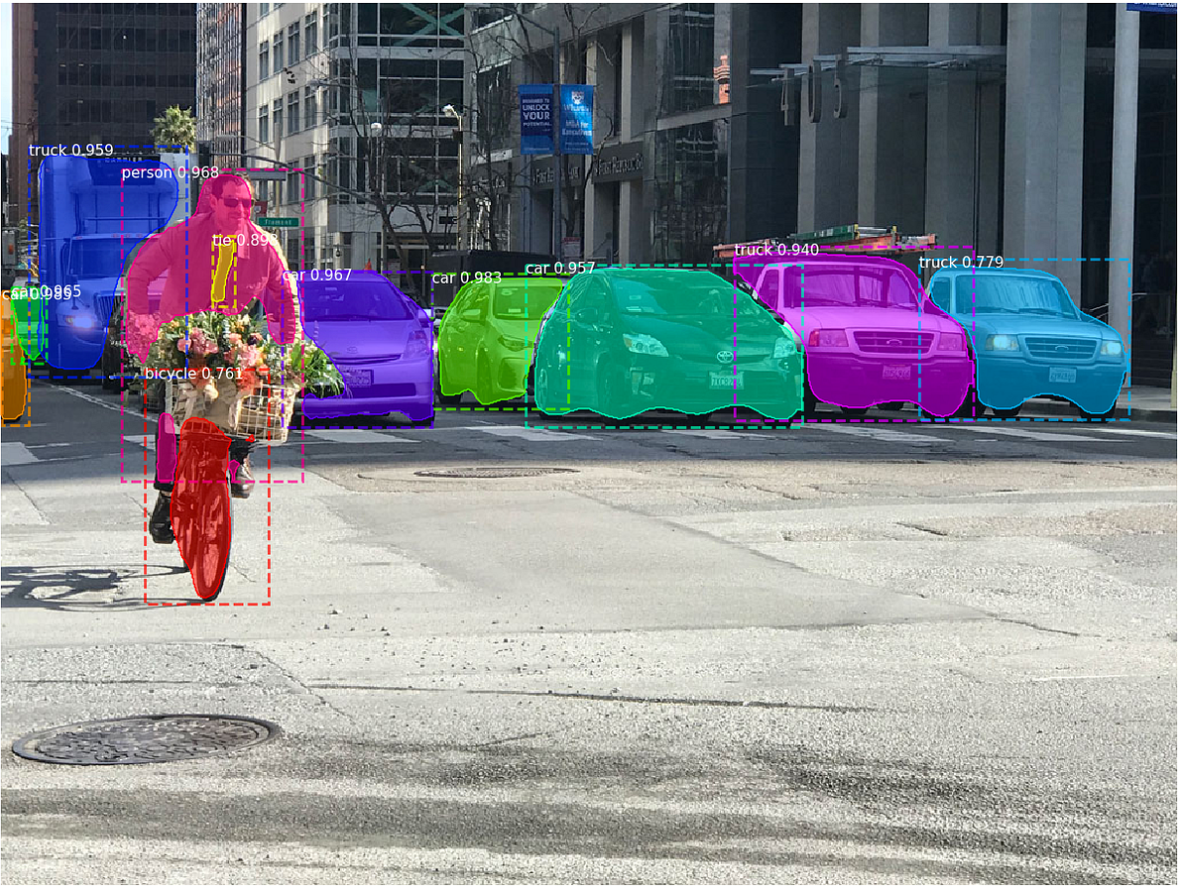
Segment Anything Model 3 is a unified AI model designed to perform three critical computer vision tasks within a single architecture: object detection, image segmentation, and video tracking.
Traditionally, these tasks required separate models, increasing complexity and computational cost. SAM 3 simplifies this by combining all capabilities into one system, making it more efficient and scalable for real-world applications.
The defining feature of SAM 3 is its ability to understand visual concepts through prompts. Instead of relying on predefined categories, the model can interpret natural language inputs and identify corresponding elements in images or videos.
For example, instead of detecting a generic category like “person,” the model can identify more specific concepts such as a person wearing a red jacket or a group of people sitting without holding objects. This flexibility is what makes SAM 3 significantly more powerful than earlier models.
The Breakthrough Behind SAM 3.1
SAM 3.1 is an upgraded version of SAM 3 that focuses primarily on performance, efficiency, and scalability, especially for video processing.
One of the most important innovations introduced in SAM 3.1 is object multiplexing. In earlier versions, each object in a video had to be processed separately, which increased computational cost and reduced speed. With multiplexing, the model can process multiple objects simultaneously in a single forward pass.
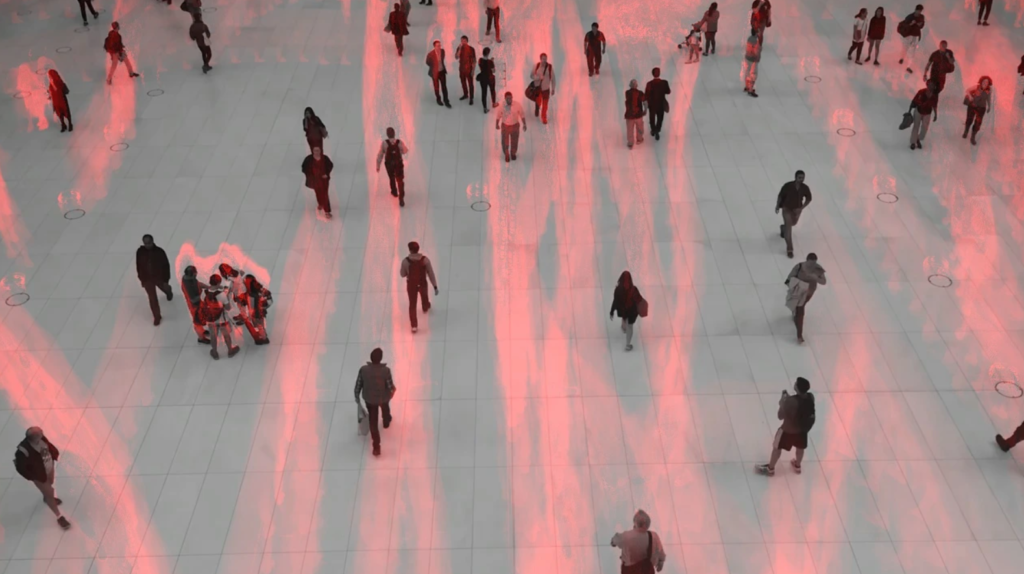
This change dramatically improves efficiency. According to the data provided, SAM 3.1 can track up to 16 objects at once and doubles video processing speed from 16 frames per second to 32 frames per second on a single high-performance GPU. This enables real-time object tracking even in complex scenes.
Additionally, this approach reduces redundant computations and memory bottlenecks by using a global reasoning strategy, making the model both faster and more accurate in crowded environments .
Promptable Concept Segmentation: A New Paradigm
One of the biggest limitations of traditional computer vision systems is their reliance on fixed label sets. These systems can only recognize objects they were explicitly trained on, which restricts their usefulness in dynamic, real-world scenarios.
SAM 3 introduces promptable concept segmentation, which allows users to define what they want to detect using natural language or visual examples.
This means the model is no longer limited to predefined categories. Instead, it can work with open vocabulary inputs, enabling it to recognize a much broader range of concepts.
For instance, instead of being restricted to labels like “car” or “dog,” users can input phrases such as a damaged vehicle on the road or a small brown dog sitting near a tree. The model interprets these prompts and segments the relevant objects accordingly.
This capability significantly expands the practical applications of AI in areas like content creation, automation, and research.
Multi-Modal Prompting System
SAM 3 is designed to accept multiple types of input prompts, making it highly flexible.
It supports text prompts, which allow users to describe objects in natural language. It also supports image exemplar prompts, where users can provide a reference image to guide the model. In addition, it retains support for visual prompts such as points, bounding boxes, and masks.
This multi-modal approach ensures that users can interact with the model in the most intuitive way possible. In situations where text descriptions are insufficient or ambiguous, visual prompts can provide additional clarity.
This flexibility is particularly valuable in professional workflows where precision is critical.
Architecture and Technical Foundation
SAM 3 builds upon several advanced AI technologies to achieve its performance.
The model uses a perception encoder developed by Meta to process both text and image inputs. Its detection component is based on transformer architectures, specifically inspired by DETR, which enables more accurate object detection.
For tracking, SAM 3 leverages memory-based mechanisms introduced in earlier versions, allowing it to maintain consistency across video frames.
The integration of these components into a single architecture is one of the key reasons behind the model’s strong performance across multiple tasks.
Data Engine and Training Innovation
One of the biggest challenges in building a model like SAM 3 is the availability of high-quality annotated data.
To address this, Meta developed a hybrid data engine that combines AI systems with human annotators. This system automates parts of the annotation process while allowing humans to verify and refine the results.
The pipeline includes AI models that generate captions, extract concepts, and create initial segmentation masks. These outputs are then reviewed by human annotators and AI verification systems to ensure accuracy.
This approach significantly improves efficiency, making annotation up to five times faster for certain tasks and increasing overall throughput compared to traditional methods .
The result is a large-scale dataset containing millions of unique concepts, enabling the model to generalize better across diverse scenarios.
Performance and Benchmark Results
SAM 3 demonstrates significant improvements over existing models in both image and video tasks.
It achieves approximately double the performance on the Segment Anything with Concepts benchmark, which evaluates how well models can recognize and segment a wide range of concepts.
The model also outperforms several strong baselines and even advanced multimodal systems in many scenarios.
In terms of speed, SAM 3 can process a single image with more than 100 objects in around 30 milliseconds on high-end hardware. For video tasks, it maintains near real-time performance depending on the number of objects being tracked.
These results highlight the model’s ability to combine accuracy and efficiency at scale.
Real-World Applications
SAM 3 and SAM 3.1 are already being applied in various real-world scenarios.
In content creation, the model enables advanced video editing features such as applying effects to specific objects or individuals with minimal effort. This simplifies workflows that previously required complex manual editing.
In e-commerce, the technology is being used to help users visualize products in their own environments before making a purchase. For example, furniture can be virtually placed in a room to assess its fit and style.
In scientific research, SAM 3 is being used for wildlife monitoring and environmental studies. It can analyze video data from camera traps and identify different species, helping researchers track biodiversity and ecosystem changes.
The model is also being explored for use in robotics and wearable devices, where understanding the environment in real time is essential.
SAM 3D and Extended Capabilities
Alongside SAM 3, Meta has introduced SAM 3D, a suite of models focused on three-dimensional reconstruction.
These models can generate 3D representations of objects and scenes from a single image, as well as estimate human pose and shape.
This opens up new possibilities in areas such as virtual reality, gaming, and digital content creation, where realistic 3D models are essential.
Limitations and Challenges
Despite its impressive capabilities, SAM 3 is not without limitations.
The model can struggle with highly specialized or domain-specific concepts, particularly in fields like medicine or scientific imaging. In such cases, fine-tuning with domain-specific data is often required.
It also performs best with short, simple prompts. Longer and more complex descriptions may require integration with larger language models to achieve accurate results.
In video applications, performance can still scale with the number of objects being tracked, although improvements like multiplexing in SAM 3.1 have significantly reduced this limitation.
The Future of Segment Anything Models
SAM 3 represents a major step toward more general-purpose AI systems that can understand and interact with the visual world in a human-like manner.
Future developments are likely to focus on improving reasoning capabilities, expanding support for complex prompts, and enhancing performance in specialized domains.
As the technology continues to evolve, it has the potential to transform industries ranging from media and entertainment to healthcare and environmental science.
Conclusion
Segment Anything Model 3 and its upgrade SAM 3.1 mark a significant milestone in the evolution of computer vision.
By combining detection, segmentation, and tracking into a single unified system, and enabling open vocabulary interaction through prompts, Meta has created a model that is both powerful and versatile.
The introduction of object multiplexing in SAM 3.1 further enhances its efficiency, making real-time applications more accessible than ever before.
As adoption grows and the technology continues to improve, SAM 3 is poised to become a foundational tool in the future of AI-driven visual understanding.
Visit website: https://ai.meta.com/sam3