Table of Content
- Introduction
- The Shift from Digital Assistants to Autonomous Agents
- How ERC-8004 as a Digital Identity Framework
- x402: Enabling Machine-to-Machine Payments
- Real-World Use Case of Autonomous AI Transactions
- Big Tech vs Open Blockchain Ecosystems
- Stablecoins as the Foundation of the Agent Economy
- Impact on Digital Business Models
- Future of Work and Digital Interaction
Introduction
Artificial intelligence is rapidly evolving from a passive assistant into an active economic participant. While modern AI systems can analyze complex datasets and generate high-level outputs, they still lack one crucial capability: the ability to execute transactions independently. This limitation has created a gap between intelligence and action, preventing AI from reaching its full potential in real-world markets.
A new technological shift is addressing this gap. Emerging blockchain standards such as ERC-8004 and x402 are laying the foundation for what is now being called the agent economy, where AI systems can operate as autonomous entities capable of making decisions, executing payments, and participating in digital markets without human intervention.
The Shift from Digital Assistants to Autonomous Agents
Traditional AI systems function primarily as advisors. They can recommend products, optimize workflows, or generate content, but the final decision and execution always depend on human input. This model limits efficiency and scalability, especially in environments where speed and automation are critical.
The agent economy introduces a new paradigm where AI systems are no longer dependent on manual approvals. Instead, they interact directly with other systems through machine-to-machine communication, enabling real-time decision-making and execution. This transition represents a move from an internet of information to an internet of actions, where algorithms do not just suggest outcomes but actively perform them.
Understanding ERC-8004 as a Digital Identity Framework
ERC-8004 introduces a new form of identity for AI agents in the form of dynamic, data-rich NFTs. Unlike traditional digital identities, this system embeds reputation, performance history, and validation rules directly into the identity layer.
Each AI agent is assigned a unique identity that includes a reputation score based on past actions. This reputation becomes critical in determining trust and access within the ecosystem. If an agent consistently performs well, its credibility increases, enabling it to interact with higher-quality counterparties. Conversely, poor performance can immediately limit its participation in the network.
This approach creates a transparent and verifiable trust system, which is essential for autonomous economic interactions where traditional verification methods are too slow or inefficient.
x402: Enabling Machine-to-Machine Payments
While ERC-8004 establishes identity and trust, x402 provides the financial infrastructure required for autonomous transactions. Built around the concept of direct API-based payments, x402 allows AI agents to pay for services in real time without relying on traditional subscription models.
In this system, when an AI agent requests a service, it receives payment instructions and completes the transaction programmatically. The payment confirmation is then attached to the request, enabling seamless access to the service. This eliminates the need for accounts, manual billing, or recurring subscriptions, making transactions more efficient and scalable.
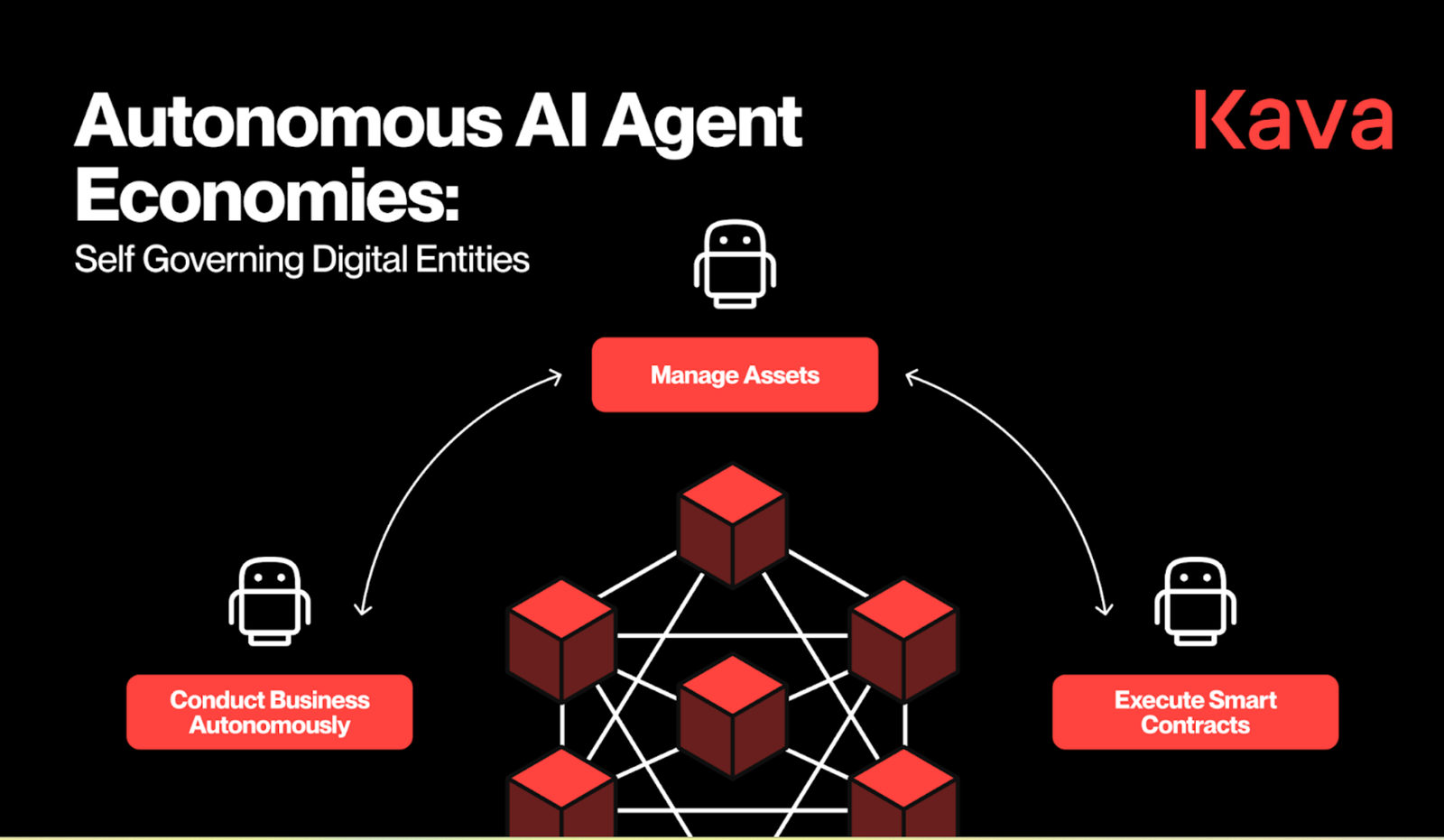
The combination of identity and payment infrastructure allows AI agents to function independently, executing tasks such as purchasing goods, accessing data, or interacting with services without human involvement.
Real-World Use Case of Autonomous AI Transactions
A practical example of this system involves an AI agent purchasing a product online. The agent verifies its identity and reputation using ERC-8004, establishes transaction conditions, and locks funds in a smart contract through x402. Once the product is delivered, the payment is automatically released, and both parties’ reputations are updated.
This process demonstrates how blockchain technology introduces determinism into AI operations, ensuring that transactions are executed only when predefined conditions are met. It addresses one of the core challenges of AI systems, which is their probabilistic nature, by enforcing strict execution rules at the transaction level.
Big Tech vs Open Blockchain Ecosystems
The rise of autonomous AI payments is also creating a divide between centralized and decentralized approaches. Large technology companies are developing controlled ecosystems that prioritize security and compliance, often restricting interactions to verified partners. While this reduces risk, it limits flexibility and innovation.
In contrast, blockchain-based systems offer open, permissionless environments where AI agents can interact freely. This model emphasizes efficiency and scalability but requires robust trust mechanisms such as on-chain reputation systems to function effectively.
The competition between these approaches will shape the future of digital commerce, influencing how AI systems interact with markets and users.
Stablecoins as the Foundation of the Agent Economy
For autonomous transactions to work effectively, stability in value transfer is essential. Volatile cryptocurrencies are not ideal for machine-driven payments, as price fluctuations can disrupt automated processes. Stablecoins provide a reliable alternative, enabling predictable and programmable transactions.
These digital assets allow developers to embed complex financial logic directly into transactions, such as conditional payments, revenue sharing, and escrow mechanisms. As a result, stablecoins are becoming a critical component of the emerging agent economy.
Impact on Digital Business Models
The transition to an agent-driven economy has significant implications for existing business models, particularly those based on advertising and user attention. AI agents do not engage with content in the same way humans do. They prioritize efficiency, cost, and reliability rather than visual appeal or emotional messaging.
This shift could disrupt traditional advertising models, forcing companies to rethink how they reach and influence users. Instead of targeting human attention, businesses may need to optimize for algorithmic decision-making, focusing on data quality, pricing, and performance metrics.
Future of Work and Digital Interaction
As AI agents become more autonomous, the nature of work and digital interaction will change. Organizations may deploy multiple AI agents, each responsible for specific tasks and operating within predefined budgets. These agents could collaborate with other systems, negotiate services, and optimize outcomes without direct human oversight.
Human roles may shift toward strategic oversight, setting objectives, and managing the performance and reputation of AI systems rather than executing individual tasks.
Conclusion
The emergence of ERC-8004 and x402 marks a turning point in the evolution of artificial intelligence. By enabling identity, trust, and autonomous payments, these technologies are transforming AI from a passive tool into an active participant in the global economy.
The agent economy is still in its early stages, but the foundational infrastructure is already in place. As adoption grows, AI systems will increasingly operate independently, reshaping markets, business models, and the way digital interactions are conducted.