
Table of Content
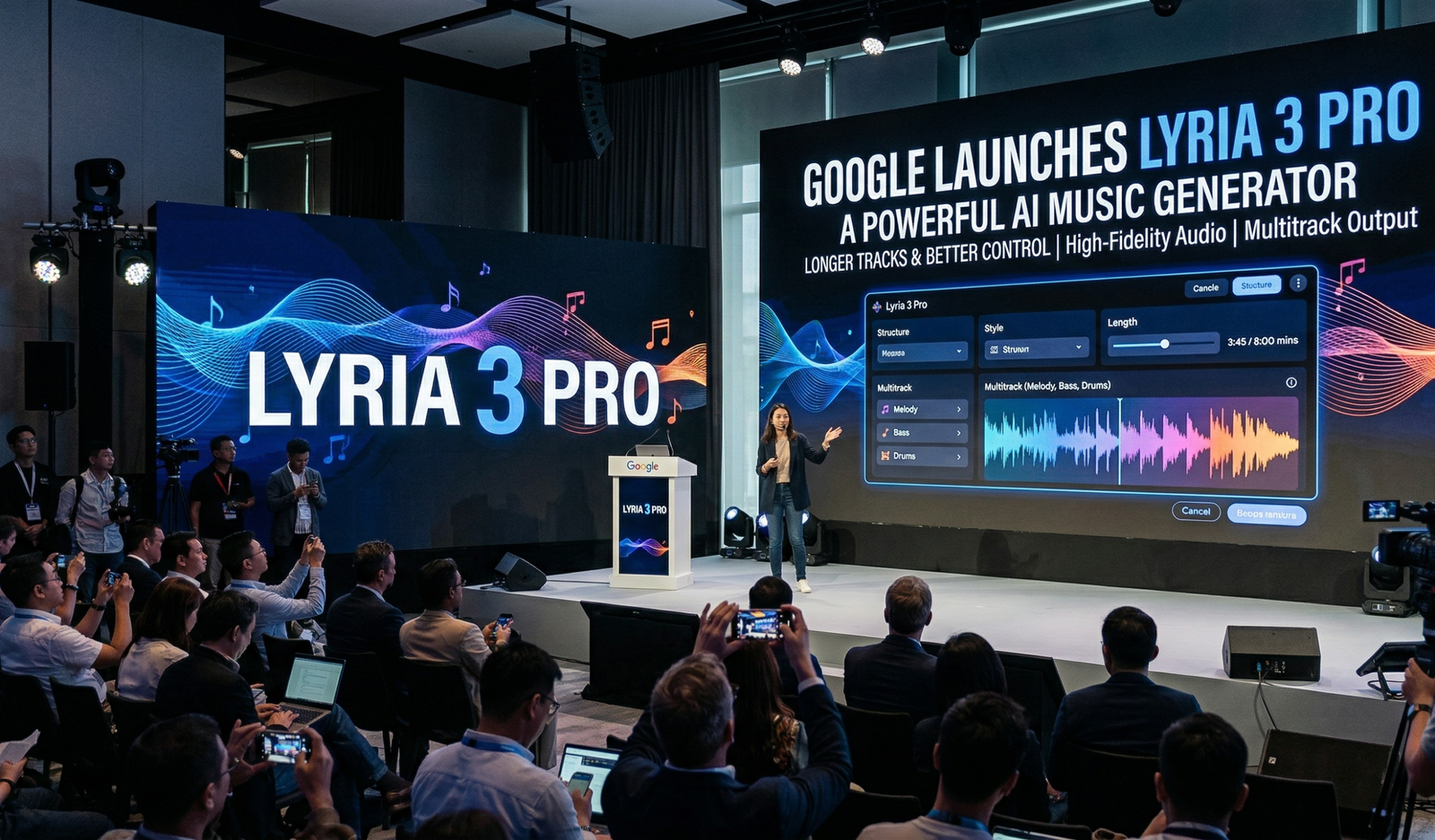
Artificial intelligence is rapidly transforming the way we create content, and music is no exception. Recently, Google introduced a major upgrade to its AI music generation technology with the launch of Lyria 3 Pro. This new model builds on the capabilities of its earlier version and brings significant improvements in track length, creativity, and user control.
If you are interested in AI music tools, content creation, or future technology trends, this update is something worth understanding in detail.
What is Lyria 3 Pro?
Lyria 3 Pro is Google’s latest AI-powered music generation model. It allows users to create original music tracks simply by writing prompts. Compared to the earlier version, Lyria 3, this new model is more advanced and offers better results.
The biggest upgrade is that users can now generate music tracks up to three minutes long, whereas the previous model was limited to just 30 seconds. This change alone makes the tool far more practical for real-world use, such as creating background music, full songs, or video soundtracks.
Key Features of Lyria 3 Pro
1. Longer Music Generation
One of the most noticeable improvements is the ability to create longer tracks. A three-minute duration allows users to generate complete compositions instead of short snippets.
This is especially useful for: YouTube creators, editors, Content marketers and Independent musicians.
Instead of stitching multiple clips together, users can now generate a more complete musical experience in one go.
2. Better Creative Control
Lyria 3 Pro gives users more control over how their music is structured. You are no longer limited to vague prompts. Now, you can define different parts of a song, such as: Intro, Verse, Chorus and Bridge.
This means the AI understands music structure more deeply and can produce compositions that feel more natural and professional.
3. Improved Customization
Another major upgrade is customization. Users can guide the AI more precisely by describing the mood, style, instruments, and even progression of the track.
For example, instead of just typing “happy music,” you can write something like:
“Upbeat pop song with soft piano intro, energetic chorus, and emotional bridge.”
The result will be far more aligned with your vision.
Where You Can Use Lyria 3 Pro
Google is not limiting this technology to just one platform. Lyria 3 Pro is being integrated across multiple tools, making it accessible for different types of users.
1. Gemini App
The model is available inside the Gemini app, but there’s a catch — only paid subscribers can access Lyria 3 Pro. Free users may still be limited to basic features.
2. Google Vids
Lyria 3 Pro is also being added to Google’s video editing platform. This makes it easier for creators to generate background music directly while editing videos.
3. ProducerAI Tool
Google recently expanded its AI music ecosystem by acquiring a tool called ProducerAI. Lyria 3 Pro is now being integrated into it, allowing more advanced music production workflows.
4. Enterprise Tools
Google is also bringing this technology to developers and businesses through: Vertex AI (public preview), Gemini API and AI Studio.
This means companies can build their own music generation systems using Lyria 3 Pro.
How Google Trained Lyria 3 Pro
One important concern around AI-generated music is copyright and data usage. Google has addressed this by stating that the model was trained using: Licensed partner data, Permissible data from YouTube and Internal datasets from Google.
The company also emphasized that the model does not directly copy or mimic any artist.
However, if a user mentions a specific artist in the prompt, the AI may take broad inspiration from that style. This is meant to guide the output without violating originality.
AI Transparency with SynthID
To ensure transparency, Google is marking all music created with Lyria 3 and Lyria 3 Pro using a system called SynthID.
This acts like a digital watermark that indicates the track was generated using AI. It helps in: Identifying AI-generated content, Preventing misuse and Maintaining authenticity.
As AI content grows, such labeling systems are becoming increasingly important.
Growing Concerns in AI Music Industry
The release of Lyria 3 Pro comes at a time when the music industry is actively dealing with challenges related to AI-generated content.
1. Misattribution Issues
Platforms like Spotify are introducing tools that allow artists to check whether songs are being wrongly published under their names. This is important because some AI creators upload tracks that falsely appear to be from known artists.
2. AI Detection Tools
Streaming platforms like Deezer are also working on systems that can detect AI-generated music. This helps maintain fairness and transparency in the industry.
Why Lyria 3 Pro Matters
Lyria 3 Pro is not just a small upgrade — it represents a major shift in how music can be created.
Here’s why it’s important: Makes music creation accessible to non-musicians, Speeds up content production for creators, Reduces dependency on expensive production tools and Opens new opportunities for AI-driven creativity.
At the same time, it also raises important questions about originality, copyright, and the future of human artists.
Final Thoughts
Google’s Lyria 3 Pro is a powerful step forward in AI-generated music. With longer tracks, better structure understanding, and improved customization, it offers a much more practical and creative experience compared to earlier models.
However, as with any AI technology, it needs to be used responsibly. The balance between innovation and ethical usage will play a key role in shaping the future of AI music.
If you are a content creator, developer, or someone curious about AI tools, Lyria 3 Pro is definitely worth keeping an eye on..